
 back to overview
Schlosspark Bad Homburg
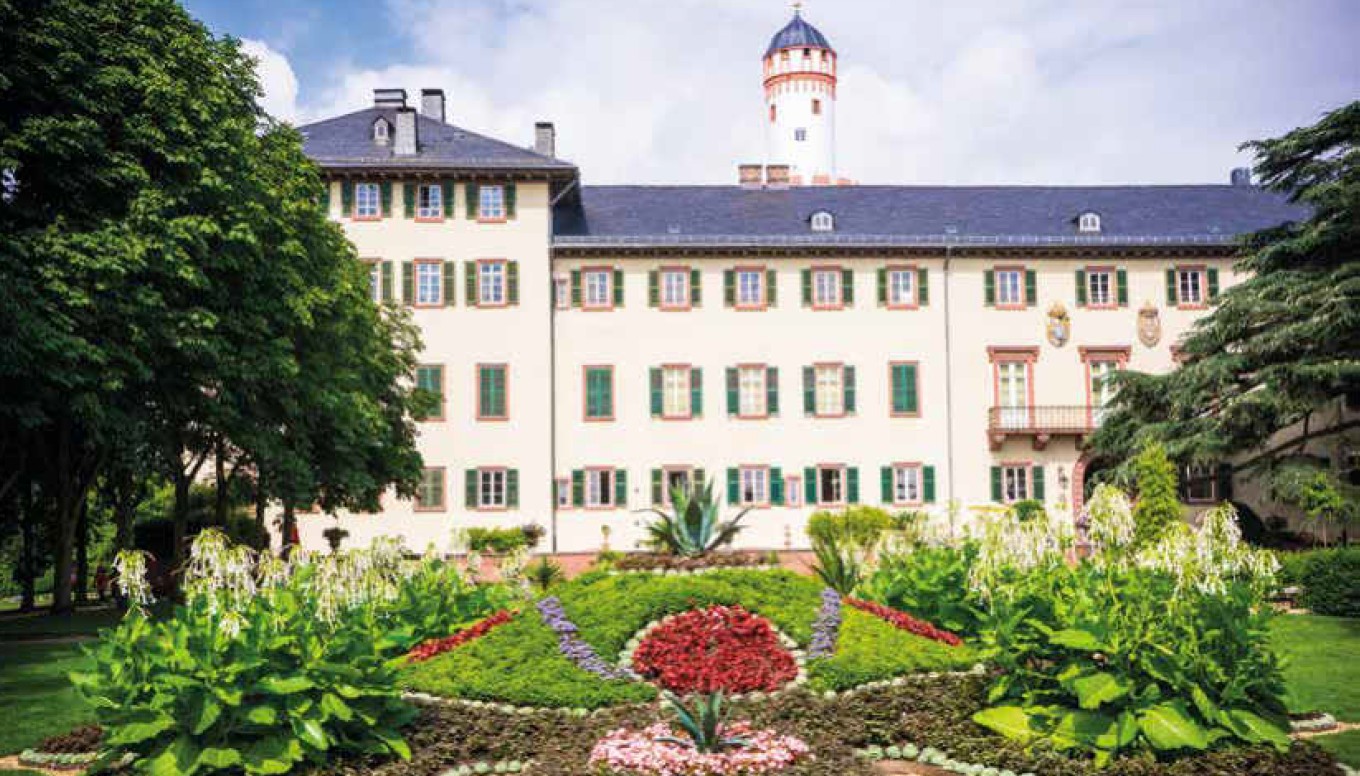
Schlosspark Bad Homburg
Summer until 8.30 pm, Winter until nightfall
The castle administration offers an extensive programme of guided tours and events. For more information, please visit www.schloesser-hessen.de
Covering 13 hectares, Bad Homburg Castle Park combines garden styles from several centuries, shaped by various generations of landgraves, Prussian kings and German emperors.
The story began in 1680 under Landgrave Frederick II, who initiated the construction of the representative palace and the layout of the garden. The orangery in the north dates from this period and still houses an impressive collection of exotic plants today.
The garden owes its current appearance largely to Landgrave Frederick V Ludwig and Landgravine Caroline. In 1771, the latter had the former vineyard converted into a bosquet (wooded area) with winding paths leading walkers down the slope. In the former quarry, known as ‘Goethe's Rest’, a decorative area with a small cottage invites visitors to linger.
Below the castle lies the landscape park, which was designed at the end of the 18th century based on the English model. At the highest point in the south-western area stands the Temple of Pomona, which houses a museum on the history of fruit growing and watches over the nearby ‘stately orchard’.
From 1866 onwards, the palace became a popular summer residence for the Prussian kings. Wilhelm II in particular left his mark on the upper garden by laying out carpet beds based on plans by court gardener Georg Karl Merle. As a living reminder of earlier times, the mighty cedars that were brought to Homburg from Kew Gardens in London in 1818 on the occasion of the wedding of Frederick VI Joseph to the English princess Elizabeth still stand there today.
See also https://www.schloesser-hessen.de/en/