
 back to overview
Schlossgarten Aschaffenburg
Schlossgarten Aschaffenburg
open daily
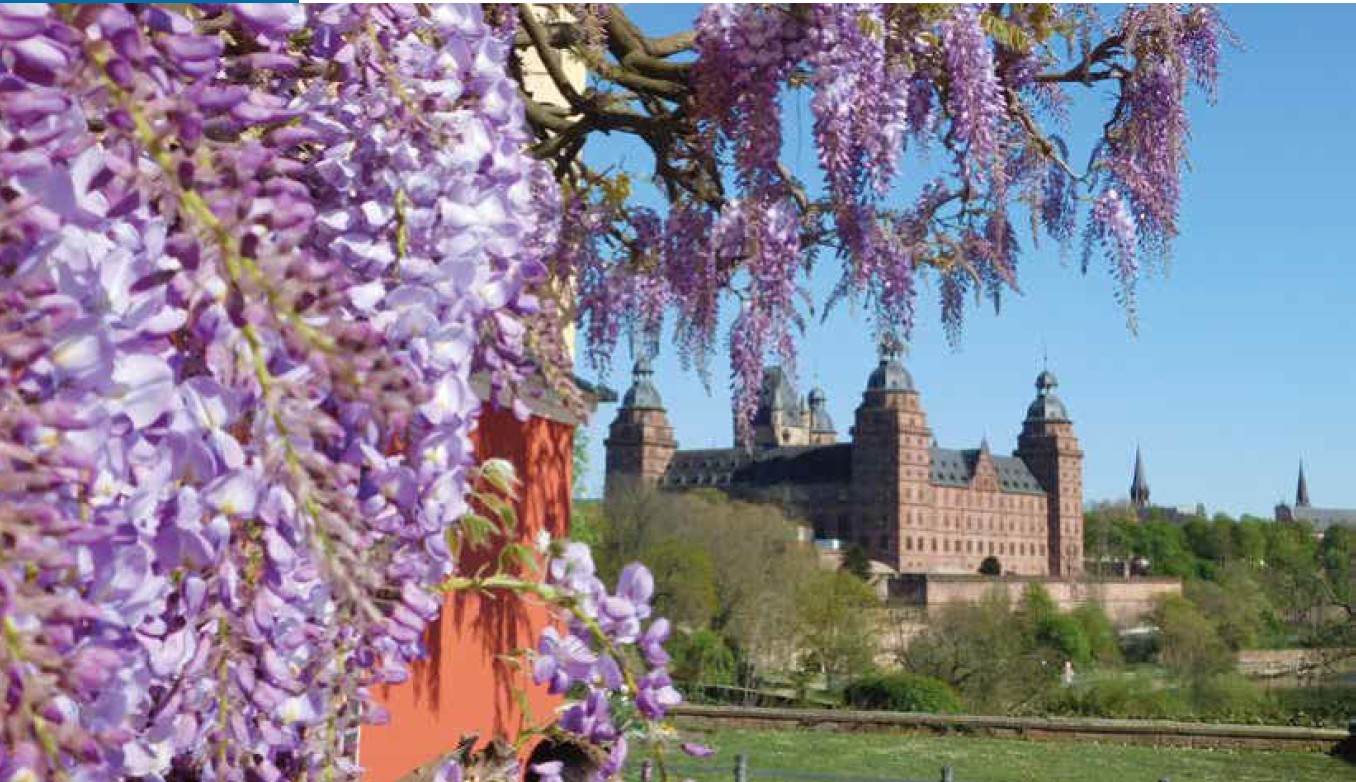
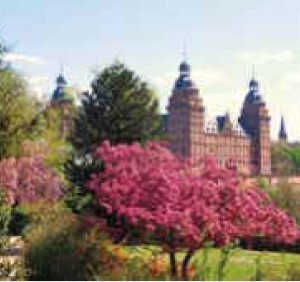
Where once mighty ramparts and moats protected the city, one of Bavaria's most picturesque parks was created in the late 18th century. It began with the breakfast temple built by Emanuel d'Herigoyen in 1782, which sits prominently on a rock high above the Main River. Just a few years later, Elector Friedrich Karl von Erthal had the former moat transformed into a spacious landscape park. An architectural highlight is the plant-covered arcade built in 1788 on the remains of the city wall, which connects Johannisburg Palace with the Breakfast Temple.
Under King Ludwig I, the complex acquired its famous Mediterranean soul. With the construction of the Pompejanum (1843–1848) and the design of its outdoor facilities, an ‘ideal Mediterranean landscape’ was created. Since real pine and cypress trees could not withstand the local climate, they were cleverly replaced by black pines and pyramid poplars, supplemented by figs, agaves and the vineyard, which was restored in 1963. Ludwig I was so enthusiastic about this southern atmosphere that he affectionately called Aschaffenburg his ‘Bavarian Nice’.