
 back to overview
Institut Mathildenhöhe Darmstadt
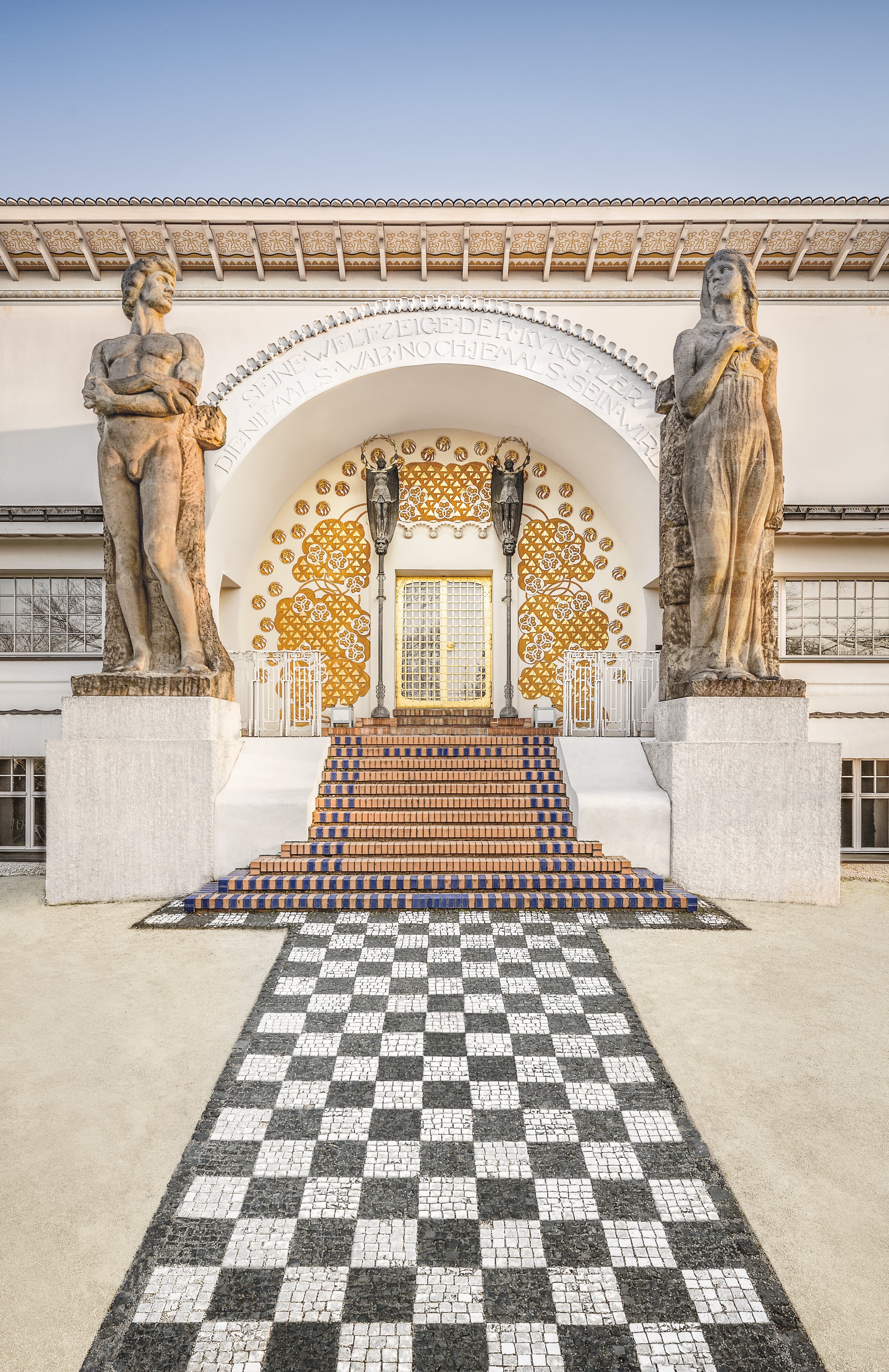


Institut Mathildenhöhe Darmstadt
64287 Darmstadt
The Mathildenhöhe Institute in Darmstadt is one of Hesse's most important cultural institutions. As guardian of the legendary artists' colony, it combines research, education and presentation in an extraordinary location. The ensemble – consisting of the striking exhibition building, the Wedding Tower, the Artists' Colony Museum and the Municipal Art Collection – is dedicated to art from around 1900, contemporary art and interdisciplinary projects. Since 2021, Mathildenhöhe has held the title of UNESCO World Heritage Site.
At the beginning of the 20th century, a unique interplay of architecture and garden art emerged on Mathildenhöhe. Under the direction of Joseph Maria Olbrich, the ideals of the garden reform movement came to life: geometric surfaces, ornate enclosures and colour-coordinated plants characterise the image.
Highlights of the site include:
- The plane tree grove: sculptures by Bernhard Hoetger lend the grounds a symbolic depth. Since 2022, it has been undergoing extensive dendrological restoration.
- The lily pond: a fountain created in 1914 by Albin Müller with floral ceramic tiles.
- The pergolas: Covered with wisteria and vines, they line the exhibition building.
In order to preserve the World Heritage Site for future generations, renovations are ongoing. The historic exhibition building was completed in 2023 and now once again offers space for high-calibre exhibitions and fascinating insights into the history of modernism.