
 back to overview
Altangarten and Wingert Burg Eppstein
Altangarten and Wingert Burg Eppstein
April–Oct.: Di–So, Public holidays 10am-5pm, Wednesdays 10am-6pm
Nov.–March: Di–So, Public holidays 11am-3 pm, closed on 26.12.; 31.12.; and 1.1.
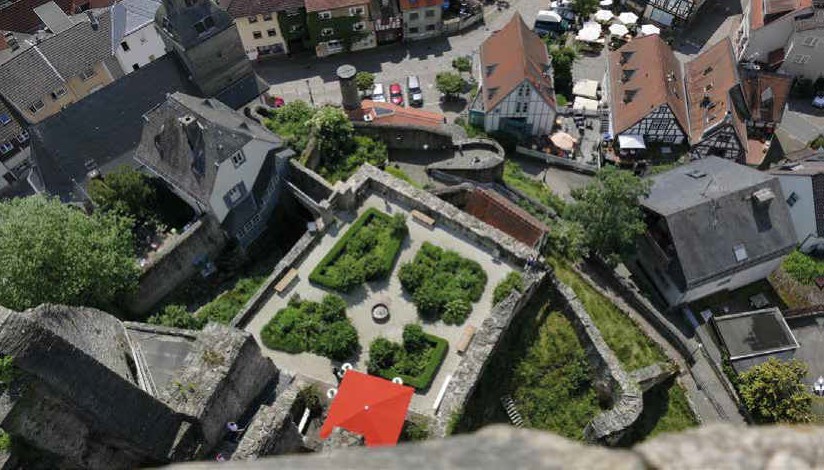
The gardens of Eppstein Castle, first mentioned in 1122, are today places of peace and enjoyment. Those who climb the 25 meters of the keep are rewarded with a panoramic view of the complex, the Imperial Temple, and the Villa Anna mountain park opposite. The castle's steep outer baileys, once strategic defensive structures, were transformed into green oases after losing their military significance.
A particular highlight is the terraced garden, which visitors reach through the ruins of the palace. Where cannons stood for defense around 1600, a garden has testified to the castle-like transformation of the complex since 1630. The name derives from the Latin "altus" (high) and describes the elevated terrace resting on vaults. The garden once served as part of the remuneration for Hessian officials before falling into disrepair in the 18th century. In 2006, it was reconstructed according to Baroque models: Symmetrical flowerbeds with a central fountain basin, as well as fragrant herbs such as wormwood, lovage, and hollyhocks, bring the past to life again.
The southern outer bailey also tells a story of change. Massively built up during the Thirty Years' War to withstand heavy artillery, its defense against bombardment from the surrounding slopes proved futile. The area was promptly transformed into an orchard and vineyard. Thanks to the Burgvereins Eppstein, the southern outer bailey has been restored to its 18th-century appearance since 2012. A special event in autumn is the grape harvest, which is traditionally celebrated together with the sponsors of the vines.